
Do I Really Need Back Surgery? What Physical Therapy Can Do First

Someone told you that you might need surgery. Maybe it was your primary care doctor after an X-ray. Maybe it was a spine specialist after an MRI. Maybe you have just been in pain long enough that you are starting to wonder if surgery is the only option left.
Before you make that decision, there is something worth knowing: for the majority of common back conditions, surgery is not the only path, and for many people, it is not even the better one. The research on this is surprisingly clear, and it is not what most patients expect to hear.
This is not anti-surgery. Surgery saves lives and restores function when it is the right tool. But it is used far more often than the evidence supports, and most people facing a back surgery recommendation have never been told the full picture of what physical therapy can actually do first.
The Honest Truth About Back Surgery Rates
The United States has among the highest rates of spinal surgery in the world, roughly two to five times higher than most other developed countries. That gap is not explained by Americans having worse backs. It reflects a system where surgery is often offered before conservative options have been genuinely exhausted.
Here is something else worth knowing: imaging findings and pain do not always match. Studies have found herniated discs, stenosis, and degenerative changes on MRI in a significant percentage of people with no pain at all. An MRI that shows something abnormal does not automatically mean that thing is causing your pain, and it does not automatically mean surgery will fix it.
An MRI finding is not a surgery recommendation. It is information. What you do with that information, and whether conservative treatment has been genuinely tried first, is where the decision actually lives.
What Physical Therapy Actually Does for Back Pain
Physical therapy for back pain is not just stretching and heat packs. When it is done well, it is a systematic process of identifying the specific mechanical, muscular, and movement factors driving your pain, and addressing them directly.
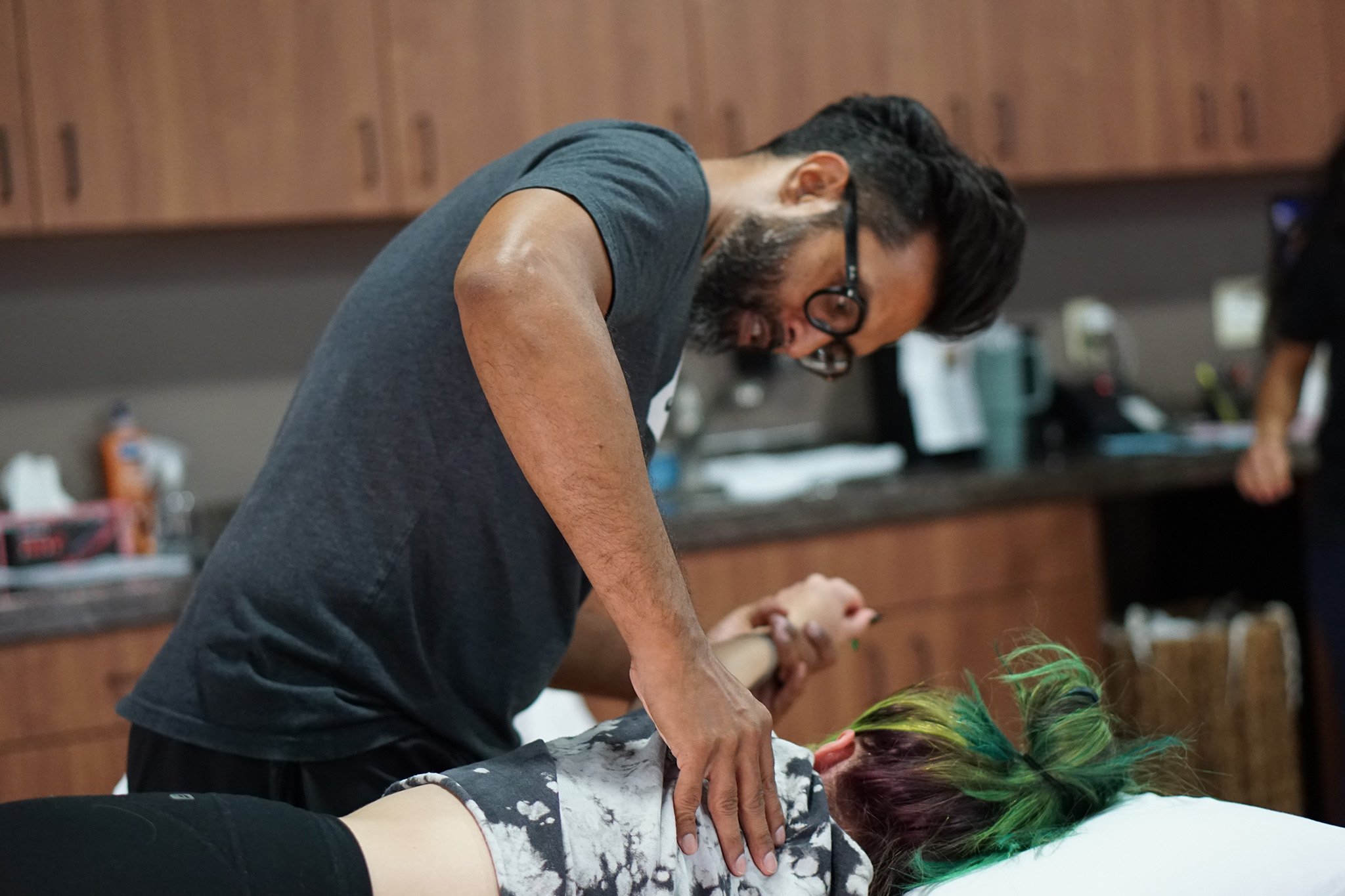
That typically involves hands-on manual therapy to restore movement and reduce pain, targeted strengthening of the muscles that support and offload the spine, movement retraining to correct the patterns that are loading the painful structure, education about what is actually going on in your back and why certain movements help or hurt, and a progressive return to full activity.
The result, for many patients, is not just temporary pain relief. It is a spine that is genuinely better supported and more resilient than it was before the pain started. That is something surgery cannot deliver on its own.
Conditions Where PT Works as Well as Surgery
This is not a blanket statement. It depends heavily on the specific diagnosis, how long the problem has been present, and how well the PT program is designed and followed. But for these common conditions, the evidence consistently shows physical therapy producing outcomes comparable to surgery for a meaningful proportion of patients:
A notable example: a major study comparing physical therapy to surgery for lumbar spinal stenosis found that patients in both groups improved significantly, and outcomes at one and two years were similar. The PT group avoided the risks and recovery time of an operation entirely.
For herniated discs, research consistently shows that the majority of disc herniations actually shrink on their own over time, and that patients who pursue conservative care first achieve similar long-term outcomes to those who have surgery, with fewer complications.
When Surgery Is Genuinely the Right Call
Being honest means acknowledging that surgery is sometimes necessary. There are real situations where it is the right answer, and sometimes the only answer.
Beyond emergency situations, surgery makes clear sense when neurological function is progressively worsening despite conservative treatment, when there is spinal instability from fracture, tumor, or infection, when a patient has completed a genuine, well-structured course of PT and other conservative measures and still has severely compromised quality of life, or when the specific anatomy of the problem makes conservative treatment unlikely to succeed.
The key phrase is "genuine course of PT." Six visits of generic exercises over two months does not qualify. A well-designed, progressively loaded, hands-on program followed consistently for 10 to 12 weeks does. Most people who are told PT "didn't work" never actually had that.
What Good PT for Back Pain Actually Looks Like
If you have tried PT before and it did not help, the most common reasons are: the program was too generic, the exercises were not specific to your actual problem, there was not enough manual therapy, or you were not given enough of a chance to progress before it was considered a failure.
At Synergy Physical Therapy in Scottsdale, we start every back pain patient with a thorough assessment that goes well beyond where it hurts. We look at how you move, what loads and positions provoke or relieve your symptoms, where your strength deficits are, and what your spine is actually doing under load. From that, we build a specific program, not a protocol off a shelf.
That program will almost certainly include hands-on manual therapy, specific targeted exercise, movement retraining, and a clear progression plan with milestones. We will also be honest with you if we think your situation warrants a surgical consultation. We are not in the business of keeping patients in PT when surgery is what they actually need.
It Is Not Just the Back
The same principle applies well beyond back pain. For many common orthopedic conditions, physical therapy is consistently underused as a first-line treatment before surgery is considered. Knee pain from osteoarthritis or meniscus issues, shoulder pain from rotator cuff tears, hip pain, and neck pain all have strong evidence supporting PT as a legitimate and often superior alternative to early surgical intervention.
If you have been given a surgery recommendation for any musculoskeletal condition, it is worth asking whether a structured course of PT has genuinely been tried first. In many cases, the honest answer is no.
Common Questions
Not Sure If You Need Surgery?
Come talk to us first. Our Scottsdale physical therapists offer free consultations for new patients. We will give you an honest assessment of what is going on and whether PT is a realistic path for your situation.