
Knee Pain: What causes it and what can PT do?

Your knee hurts. Maybe it came on suddenly during a hike or a workout. Maybe it has been building gradually for months and you have been pushing through it. Maybe you woke up one morning and it was just there, stiff and sore for no clear reason.
Knee pain is the most common musculoskeletal complaint we treat at Synergy Physical Therapy in Scottsdale, and it is consistently among the top reasons people search for physical therapy across Arizona. That is partly because the knee is a complex joint that takes an enormous amount of force through daily activity, and partly because knee pain is one of those things that rarely resolves completely on its own once it has become a real problem.
The good news: most knee pain, including conditions people assume will eventually require surgery, responds very well to the right physical therapy program. Understanding what is causing your knee pain is the first step toward fixing it.
Why Knees Are So Commonly Injured
The knee sits between two long lever arms, the thigh and the shin, and is subjected to forces several times your body weight with every step, stair, or squat. It depends almost entirely on the surrounding muscles and soft tissue for stability, which means that when those structures are not doing their job properly, the joint itself takes the punishment.
In Scottsdale specifically, the active outdoor culture adds another layer. Hiking the McDowell Mountains, cycling, pickleball, golf, and year-round recreational sports all create repetitive loading patterns that can overload specific knee structures over time. Add in the fact that Arizona's population skews toward active retirees who may have pre-existing joint changes from years of activity, and you have a recipe for high knee pain prevalence.
The Most Common Causes of Knee Pain
Knowing what is causing your knee pain matters because the treatment is different for each condition. These are the most common presentations we see:
Osteoarthritis
The most common cause of knee pain in adults over 50, and increasingly common in active people in their 40s. Involves the gradual breakdown of cartilage inside the joint. Often described as a deep ache that is worse with prolonged activity and in the morning. Responds very well to physical therapy, even in advanced cases.
Patellofemoral Pain (Kneecap Pain)
Pain around or under the kneecap, typically worse with stairs, squatting, and sitting for long periods. One of the most common knee complaints in active people of all ages. Almost always driven by muscle imbalances and movement pattern issues rather than structural damage, which makes it very responsive to PT.
IT Band Syndrome
Sharp pain on the outer side of the knee, common in runners and cyclists. Caused by the iliotibial band creating friction against the outer knee as it repeatedly tracks over the joint during activity. A load management and hip strengthening problem more than a knee problem.
Meniscus Tears
The menisci are two C-shaped cartilage pads that cushion the knee joint. Tears can happen acutely from a twist or gradually through degeneration. Many meniscus tears, particularly degenerative ones in older adults, are effectively treated with physical therapy without surgery.
ACL and Ligament Injuries
ACL tears are most common in cutting and pivoting sports. Depending on the severity and the patient's activity goals, treatment ranges from conservative PT to surgical reconstruction followed by a 9 to 12 month rehab program.
Patellar Tendon Pain
Common in jumping athletes and active people. Pain just below the kneecap that is worst with loading activities. A tendon loading problem that responds to progressive PT once the right approach is used.
What Physical Therapy Does for Knee Pain
Physical therapy for knee pain is not a generic set of quad stretches and ice. When it is done well, it is a systematic process that identifies what is specifically driving your pain and addresses it directly.
For most knee conditions, that means starting with an assessment of not just the knee but the hip, ankle, and movement patterns that affect how the knee loads. The knee is often the victim, not the cause. Weak hips, poor ankle mobility, and faulty movement mechanics all create excessive and abnormal loading at the knee.
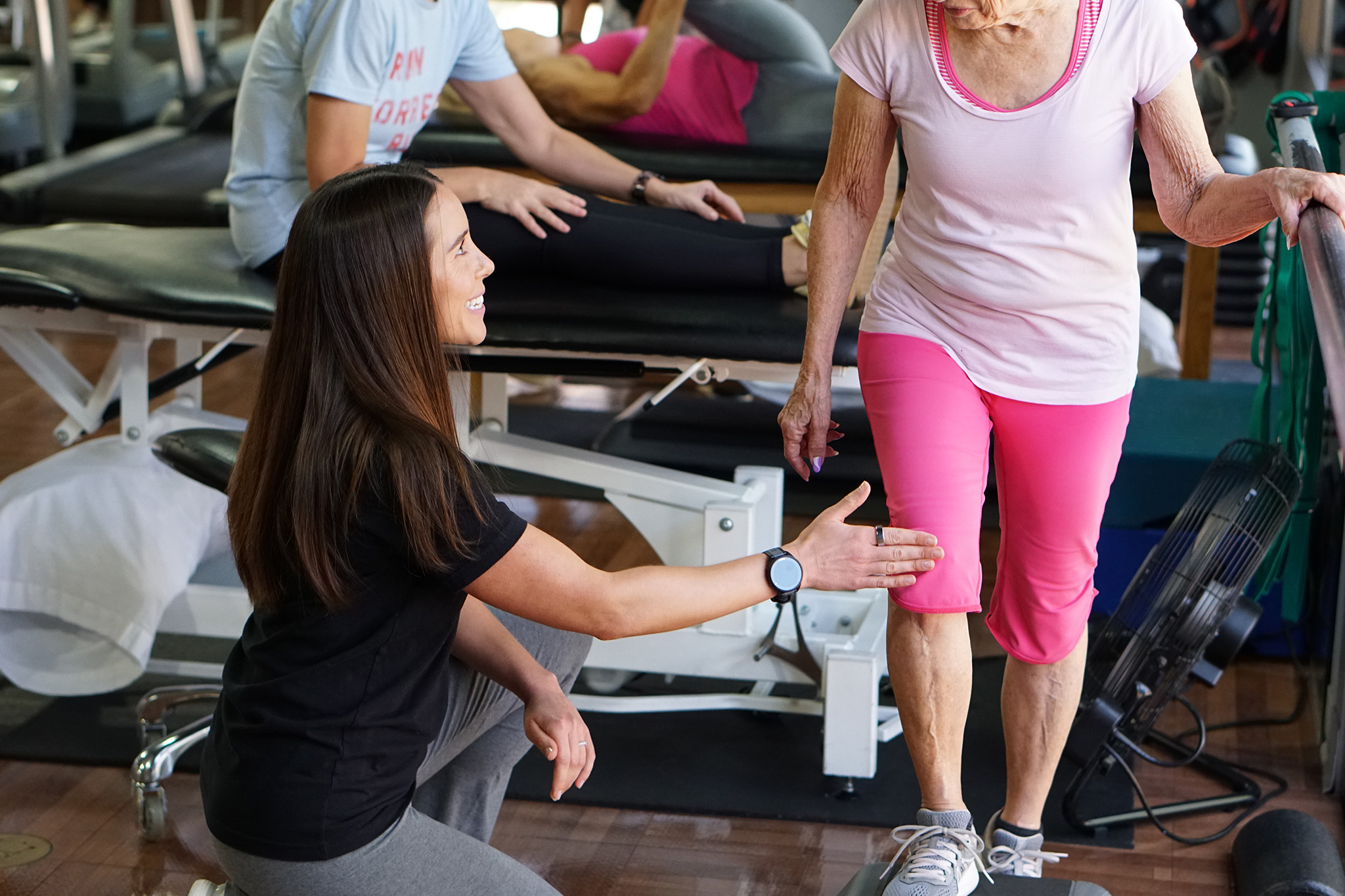
Treatment typically involves hands-on manual therapy to reduce pain and restore movement, progressive strengthening of the quad and hip muscles that protect the knee, movement retraining to correct the patterns that are overloading the joint, and a structured return to the activities you were doing before the pain started.
The knee is often the victim, not the cause of its own pain. Addressing the hip and movement mechanics that created the problem is what produces lasting results, not just treating where it hurts.
The Surgery Question
A lot of patients come to us after being told they might need knee surgery. The honest answer is that for many common knee conditions, surgery is not the first or even necessarily the best answer.
For knee osteoarthritis, multiple large studies have shown that supervised PT produces outcomes comparable to surgery in a significant proportion of patients. For many meniscus tears in older adults, research consistently shows that PT alone produces similar results to surgical trimming of the meniscus with no recovery time from an operation.
The conditions where surgery is more clearly indicated are complete ligament tears in patients who want to return to high-demand cutting sports, significant meniscus tears that are causing mechanical symptoms like locking, and cases where a genuine, well-structured course of PT has been tried and failed.
If your knee locks up completely and will not straighten, or if you have severe swelling after an acute injury, seek medical evaluation promptly. These can indicate conditions that need timely assessment.
Knee Pain in Scottsdale
Scottsdale's active lifestyle is one of the best things about living here. It is also, practically speaking, a significant driver of the knee pain we treat. A few patterns we see regularly:
Pickleball has exploded in Scottsdale, and with it, a wave of lateral knee injuries and patellar tendon problems from the quick direction changes and stop-start movement patterns the sport demands. If you have recently taken up pickleball or dramatically increased your court time, that is relevant context for your knee pain.
Hiking options in the Scottsdale area are plentiful, including the McDowell Sonoran Preserve, South Mountain, and Pinnacle Peak. These trails frequently involve significant downhill loading, which places high compressive forces on the knee joint. Hikers with any underlying knee changes often notice symptoms most on the descent.
The year-round warm weather keeps people active but also means that overuse conditions that might resolve with a natural seasonal break in colder climates tend to become chronic in Arizona.
What to Expect From Knee PT at Synergy
At Synergy Physical Therapy in Scottsdale, knee pain patients start with a thorough evaluation that covers the history of the problem, a movement assessment, hands-on testing of the joint and surrounding structures, and a conversation about your goals and what activities matter most to you.
From that, we build a program specific to your diagnosis and your life. We do not give everyone with knee pain the same exercise sheet. We also give you a realistic picture of what to expect: how long recovery is likely to take, what milestones we are working toward, and when we think you can start returning to the things you were doing before.
Common Questions
Knee Pain Slowing You Down?
Our Scottsdale physical therapists offer free consultations for new patients. We will assess what is going on with your knee and give you an honest picture of what treatment would look like.