
Morning Heel Pain? It May Be Plantar Fasciitis.

You know the feeling. You wake up, swing your legs over the side of the bed, put your feet on the floor, and the moment you stand up, there it is. A sharp, stabbing pain in your heel that stops you in your tracks. You hobble to the bathroom, wait for it to ease off, and then spend the rest of the day either managing it or pretending it is not there.
That is plantar fasciitis. And if you have had it for more than a couple of weeks, you have probably also discovered that it is one of those things that does not seem to care how much you rest it, stretch it, ice it, or roll a ball under it. It comes back. Every morning. Sometimes worse than before.
The reason it keeps coming back is that the things most people try for plantar fasciitis do not address what is actually causing it. This guide explains what is really going on, why the usual remedies fall short, and what physical therapy does differently.
What Plantar Fasciitis Actually Is
The plantar fascia is a thick band of connective tissue that runs along the bottom of your foot, connecting your heel bone to the base of your toes. Its job is to support the arch of your foot and absorb and transmit load as you walk, run, and move.
Plantar fasciitis occurs when this tissue becomes overloaded, leading to pain and degeneration at the point where it attaches to the heel bone. The name implies inflammation, and while some inflammation is present in early or acute cases, what is really happening in most chronic cases is a process called tendinopathy: structural breakdown and disorganization of the tissue from repeated overload without adequate recovery.
This distinction matters because it changes the treatment. Inflammation responds to rest and anti-inflammatories. Tendinopathy responds to progressive loading and mechanical rehabilitation. Treating a tendinopathy problem as if it were purely an inflammation problem is one of the main reasons people cycle through months of remedies without lasting relief.
Why It Hurts Most in the Morning
This is one of the most commonly asked questions about plantar fasciitis, and the answer is actually pretty straightforward once you understand the mechanics.
While you sleep, your foot rests with the toes pointed slightly downward, which puts the plantar fascia in a shortened, contracted position. When you stand up and put weight through your foot, the fascia is suddenly stretched and loaded after hours of being in that shortened state. The tissue is also less warmed up, less blood-perfused, and more sensitized at that moment.
That first step out of bed essentially ambushes the tissue. The pain typically eases after a few minutes of walking because the fascia warms up and the initial load response settles. This pattern, worst with first steps and easing with movement, is one of the hallmark signs that distinguishes plantar fasciitis from other causes of heel pain.
The fact that it eases with movement is actually important information. It tells you the tissue is not too far gone to respond. It means there is something to work with, and that the right treatment can produce real improvement.
Why It Becomes Chronic
Most people expect plantar fasciitis to resolve within a few weeks, the way a muscle strain might. When it does not, they assume something is seriously wrong or that they are stuck with it. Neither is true. What is happening is that the underlying drivers of the condition have not been addressed.
The most common underlying factors we find when assessing plantar fasciitis patients are:
Calf and Achilles tightness
The calf muscles and Achilles tendon directly influence how much load the plantar fascia takes with every step. When these structures are tight and lacking flexibility, the foot compensates in ways that increase strain on the fascia. This is one of the most consistent findings in plantar fasciitis patients and one of the most important things to address.
Weak foot and hip muscles
The small muscles of the foot that support the arch, and the hip muscles that control how your leg and foot align during walking and running, play a significant role in how load is distributed through the plantar fascia. Weakness in these areas allows abnormal loading patterns that chronically overload the tissue.
A spike in activity that the tissue was not ready for
Plantar fasciitis very frequently follows a sudden increase in walking, running, or standing activity. A new exercise routine. A trip involving a lot of walking. A job change that requires more time on your feet. The tissue was not conditioned for the new demand and broke down under the increased load.
Hard surfaces and poor footwear
Arizona's hard tile floors, concrete sidewalks, and asphalt are particularly unforgiving on the plantar fascia. Footwear that provides inadequate cushioning or support on these surfaces compounds the problem. This does not mean orthotics are always the answer, but it does mean surface and footwear are part of the picture.
Why Scottsdale Is Plantar Fasciitis Territory
We see a lot of plantar fasciitis at Synergy Physical Therapy in Scottsdale, and it is not a coincidence. Several things about life in this area create ideal conditions for it.
The year-round warm weather keeps people active on hard outdoor surfaces for twelve months a year rather than taking the natural seasonal break that colder climates impose. Hikers on the McDowell Sonoran Preserve trails, golfers walking eighteen holes multiple times a week, and pickleball players on hard courts are all doing sustained high-load activity on unforgiving surfaces.
Scottsdale homes also tend to have tile and hardwood floors throughout, which means even time spent at home involves more hard surface contact than carpet-heavy environments. And sandals and flip-flops, which are practical year-round in Arizona, offer essentially no arch support or heel cushioning.
Add the fact that Scottsdale skews toward an active, older demographic that may have reduced tissue capacity and longer history of accumulated load, and you have a community where plantar fasciitis is genuinely common.
What Does Not Work and Why
If you have had plantar fasciitis for more than a few weeks, you have probably tried some or all of these. Here is an honest assessment of each:
Rest alone
Rest reduces load and can calm acute symptoms. But it does not improve the tissue capacity of the plantar fascia. When you return to normal activity, the same demand meets the same unprepared tissue and the pain comes back. Rest is sometimes necessary in the very acute phase, but it is not a treatment.
Stretching the calf and plantar fascia
Stretching has a role in plantar fasciitis management, and it is often part of an effective PT program. But stretching alone, particularly the kind of passive calf and foot stretching most people do, rarely resolves the condition on its own because it does not address tissue capacity or strength deficits.
Night splints
Night splints keep the foot in a dorsiflexed position during sleep, which can reduce that first-step morning pain by preventing the fascia from contracting overnight. They can provide real symptomatic relief and are a reasonable adjunct tool. But they do not fix the underlying problem either.
Cortisone injections
Injections can reduce pain in the short term by addressing inflammation. For some patients they provide a useful window of reduced pain during which PT can be more comfortably started. But research consistently shows that injections alone do not produce durable long-term outcomes for plantar fasciitis, and repeated injections can weaken the plantar fascia over time.
Generic orthotics from a pharmacy
Cushioning the heel can reduce pain during activity. Again, this manages the symptom without addressing the cause. Custom orthotics prescribed by a specialist have a role for some patients, but off-the-shelf insoles alone rarely resolve the condition.
Most of the things people try for plantar fasciitis treat the pain rather than the problem. Getting lasting relief requires changing the tissue itself, and that requires the right kind of loading, not avoidance of it.
What Physical Therapy Actually Does
Physical therapy for plantar fasciitis is not just ultrasound and a sheet of stretches. When it is done well, it directly addresses the mechanical drivers of the condition and progressively rebuilds the load capacity of the tissue.
At Synergy Physical Therapy in Scottsdale, we start with an assessment that goes well beyond the foot itself. We look at calf and ankle flexibility, foot and hip strength, how you walk and load your foot during movement, your footwear, your activity levels, and what specifically triggers your symptoms. The treatment is built from that assessment.
Progressive loading of the plantar fascia
This is the most important component and the one most often missing from DIY management. The research on tendinopathy, which as we established is what most chronic plantar fasciitis actually is, consistently shows that the tissue needs progressive load to stimulate healing and rebuild capacity. Specific heel raise exercises, progressed carefully over time, are the foundation of effective plantar fasciitis rehabilitation.
Calf and Achilles work
Improving flexibility and strength in the calf and Achilles complex directly reduces the load on the plantar fascia. This is not just static stretching. It involves eccentric loading and progressive strengthening of the entire posterior chain of the lower leg.
Hands-on manual therapy
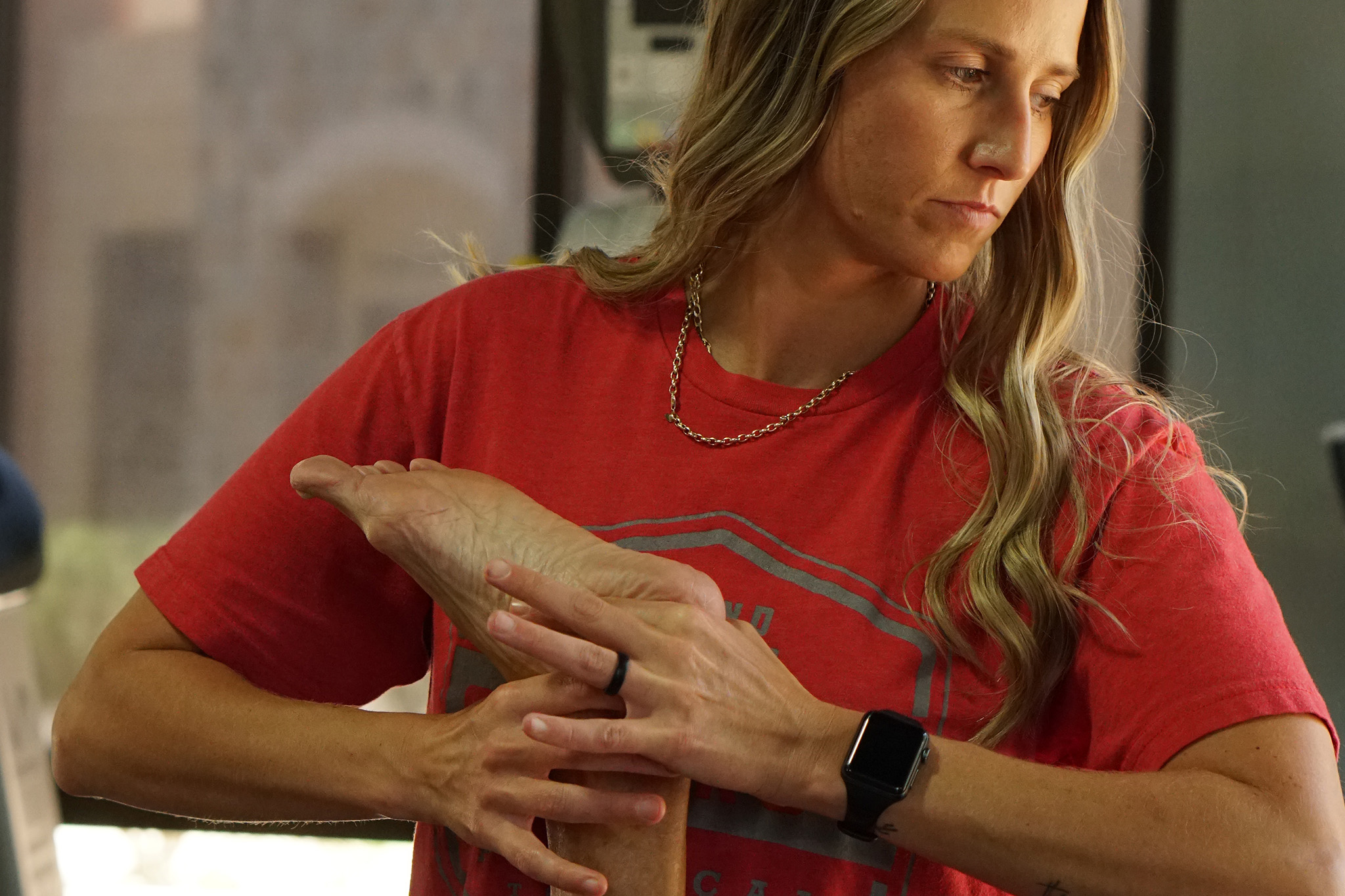
Soft tissue mobilization of the calf, Achilles, and plantar fascia reduces tissue tension and can significantly improve pain levels, particularly in the early phase of treatment. Joint mobilization of the ankle and foot can restore movement that has been restricted by pain and guarding.
Load and activity management
One of the most practical parts of PT for plantar fasciitis is figuring out exactly what your tissue can currently handle and managing your activity within that window while we build capacity. This does not mean stopping everything. It means being strategic about load so you are not aggravating the condition while we are trying to treat it.
Footwear and surface guidance
We will give you specific, practical guidance on footwear that reduces unnecessary load on the plantar fascia, and on how to manage the hard-surface reality of life in Scottsdale. This is not one-size-fits-all advice. It is based on your gait, your activity, and what you actually wear.
Other Causes of Heel and Foot Pain We Treat
Not all heel pain is plantar fasciitis, and getting the right diagnosis matters because the treatment differs. We treat the full range of foot and heel conditions at Synergy:
If your heel pain is severe, constant rather than activity-related, accompanied by significant swelling, or does not ease with a few minutes of movement, it is worth getting an evaluation promptly to rule out a stress fracture or other condition that requires different management.
Common Questions
Heel Pain Slowing You Down?
We offer free consultations for new patients. Come in and we will figure out exactly what is driving your plantar fasciitis and build a plan to actually fix it, not just manage it.